Jump to a section
The Prestige is Philips’ flagship: SenseIQ adjusts power as you brush, a light ring warns about pressure, and a charging case comes in the box. It has five modes and three intensities, and Philips rates the battery at up to 14 days. One thing changed in late 2026: since August 31, Amazon also sells a Next-Gen DiamondClean 9900 Prestige (HX9834) at the same price, with a screen on the handle and eight modes. This review covers the original (HX9990); see old vs Next-Gen for the new one.
SenseIQ: what it does
Philips’ sensing system watches pressure, motion and coverage. Two parts matter in daily use:
- Adaptive power. The brush adjusts intensity as you press, so it stays gentle if you lean in.
- Scrubbing alerts. It can flag excessive back-and-forth motion, not just pressure. For people with recession who press lightly but saw at their teeth, this is the one feature that addresses the habit directly.
Design and travel
A slim handle with premium finishes, a single-mode simplicity (one Clean mode plus intensity choices) and a charging travel case. It’s the most pleasant Sonicare to use and to pack.
| Cleaning action | Sonic with SenseIQ adaptive power |
|---|---|
| Brushing modes | 5 (Clean, White, Gum Health, Deep Clean+, Sensitive) |
| Intensity levels | 3 |
| Pressure sensor | Yes: light ring, and SenseIQ turns the power down |
| Timer | SmarTimer, head reminder |
| Battery (brand figure) | Up to 14 days |
| Charging | Charging stand plus charging travel case |
| Travel case | Charging case |
| App | Yes |
| ADA Seal | Not stated on listing |
| Brush heads | A3 Premium All-in-One |
| Warranty | 2 years |
| Status | Current (first sold 2021; HX9990) |
| Model number (US listing) | HX9990/13 |
| On Amazon US since | March 2022 |
| Amazon US check | Sold by Amazon.com (Oct 30, 2026) |
What it costs to keep
The A3 Premium All-in-One head is designed to handle plaque, gums and stains in one, and it’s among the most expensive replacement heads on the market. Over three years, heads can cost almost as much as the brush. Other Sonicare heads fit, but you lose some of the smart head recognition.
Handle Replacement heads
* Partly estimated: the handle had no main Amazon offer, the exact head wasn’t on sale, or only a reseller listed heads.
Prestige vs iO9
The flagship duel. The Prestige is gentler and better at policing technique; the iO9 cleans tooth by tooth and has a more informative on-handle display. See iO9 vs Prestige 9900.
What’s in the box
The Prestige 9900 we track (ASIN B08YCZHTMB, HX9990/13, pink) comes with the handle, one A3 Premium All-in-One head and a charging travel case. It was sold by Amazon.com for about $380 on October 30, 2026; other colours sit under different listings at similar prices.
SenseIQ, explained
Philips says the brush senses your pressure, motion and coverage up to 100 times a second. When you press too hard it lowers the intensity to protect your gums, and a light ring at the base tells you to ease off. The app then shows where you scrubbed and where you missed. It’s the most hands-off way any brush handles pressure: you don’t have to react for it to protect you.
Fifteen settings
Five modes (Clean, White, Gum Health, Deep Clean+ and Sensitive) and three intensities. You choose your preferred combination in the Sonicare app, and the handle remembers it. Without the app it runs your saved settings, so set it up once even if you never open the app again.
Battery and travel
Philips rates it at up to 14 days of twice-daily brushing, and the charging travel case means one cable on a trip. The handle is slim and light; the case is the bulky part.
Is it worth $380?
For most people, no: a Sonicare 7300 does nearly everything for about $240 less. The Prestige makes sense for people with recession or a history of scrubbing who want the brush to correct them automatically, and for people who’ll use the app’s coverage feedback. Even then, look at the Next-Gen Prestige first: same price, more features.
Who should choose it over the 7300
The 7300 costs about $240 less and shares the 62,000-movement figure, the light-ring pressure warning, the app and a charging case. The Prestige adds SenseIQ, which lowers the power for you when you press too hard and reads your brushing up to 100 times a second, plus a slimmer, more premium handle. If you respond to a warning light, the 7300 is enough. If you know you scrub without noticing, the Prestige’s automatic correction is the reason to pay more.
Looking after an expensive handle
Rinse it under the tap after brushing and wipe it dry; don’t leave it standing in water. Clean the charging case’s inside occasionally, because a damp head stored in a closed case is where grime builds up. Philips lists a two-year warranty, so register it and keep the receipt.
If you want the best Sonicare and the price doesn’t sting, buy it, and you’ll enjoy it every morning. If the price does sting, a 5900 gets you Philips' newer motor and a gentle clean for a fraction of the cost.
The near misses
Read these as differences from the Prestige 9900, not as scores. Prices are from Oct 30, 2026.
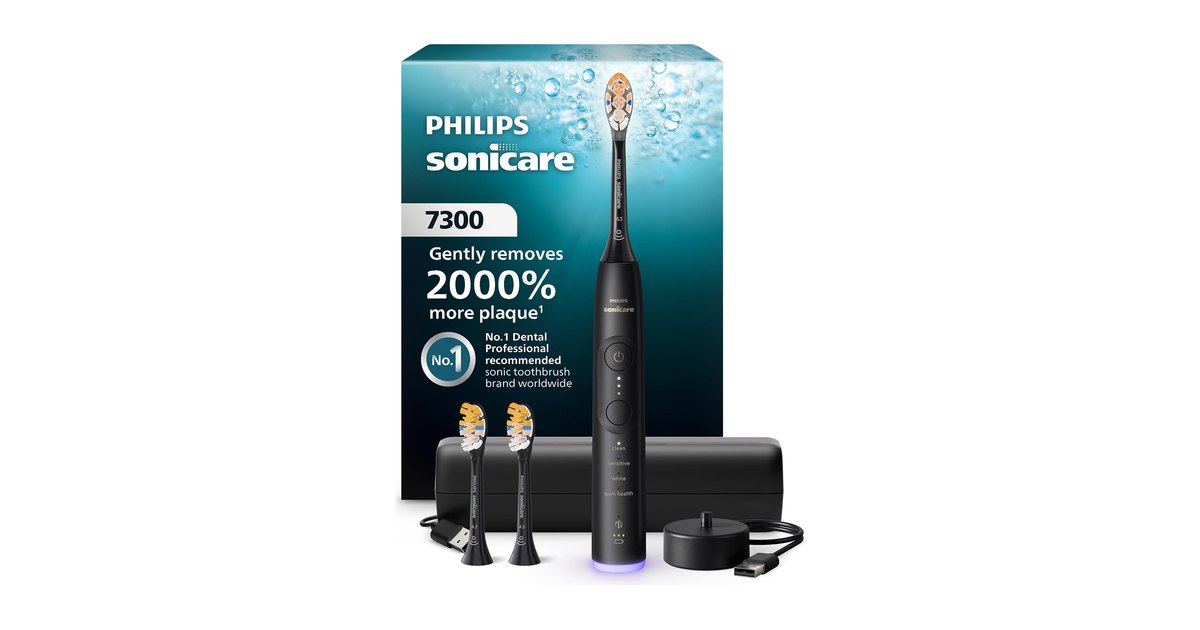
Philips Sonicare 7300
about $140 on Oct 30, 2026
- $240 cheaper up front
- about $268 less over three years
- 7 more days per charge
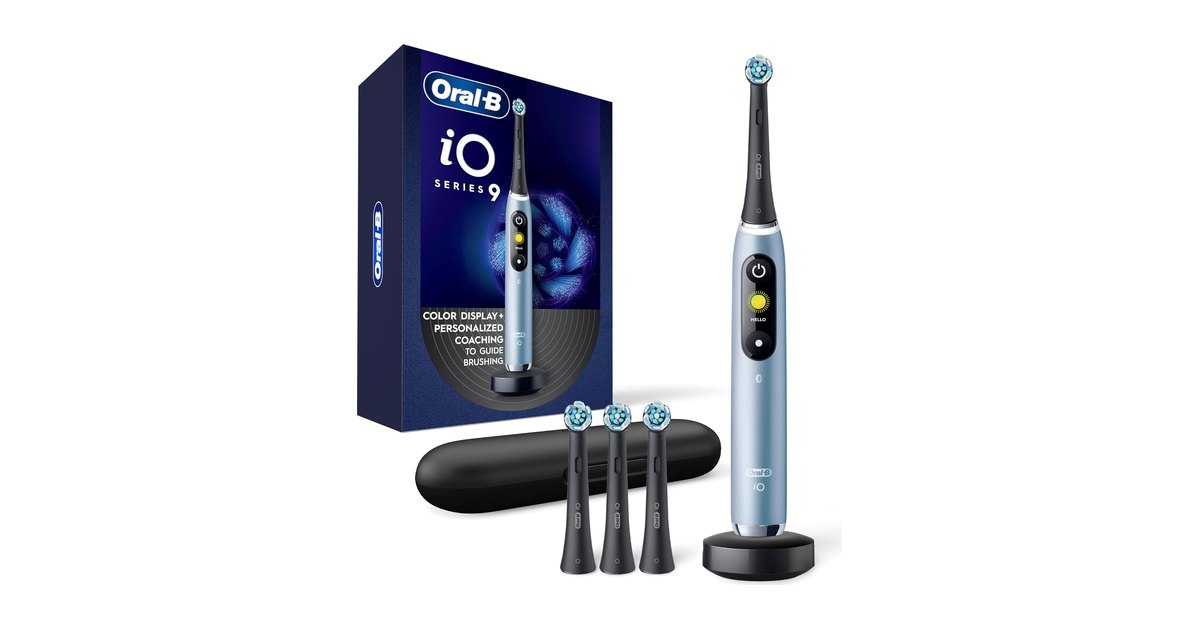
Oral-B iO Series 9
- $160 cheaper up front
- about $235 less over three years
- heads cost $4.05 less each
Is a $380 brush actually better than a $50 one?
Not at cleaning. Past a pressure warning and a timer you are paying for a quieter motor, a screen, a charging case and an app. Those are nice. They do not remove more plaque.
What we checkedThe $50 Pro 1000 and the $380 Prestige 9900 use the same two ideas: move the bristles faster than a hand can, and stop you pressing.
Our pick for thisOral-B Pro 1000Price
The one in the shop has a different number. Is it the same brush?
Usually yes. Philips in particular sells one handle under several numbers depending on what is in the box, and a club-store bundle is often the same motor with extra heads.
What we checkedAmazon US sells two Sonicare 4100 versions side by side at the same price: the older HX3681 and the July 2026 HX4031 with three intensities.
Our pick for thisPhilips Sonicare 5300Price
Things readers check with us
For the design, adaptive power and scrubbing alerts, yes, if budget isn’t a concern. For cleaning alone, cheaper Sonicares are close.
What heads does the Prestige 9900 use?
It ships with the A3 Premium All-in-One head. Other click-on Sonicare heads also fit.
Does the Prestige 9900 have a travel case?
Yes, a charging travel case.
Can I use cheaper heads on the Prestige 9900?
Yes. Any click-on Sonicare head fits, including C2 heads at about $10.26 each. SenseIQ works with any of them.
Is the Prestige 9900 good for receding gums?
It’s one of the best, because it lowers its own power when you press too hard. A cheaper brush with a visible pressure light can do much of the same job if you respond to it.